Why Your Next EV Might Sit at the Dealership for Weeks — And the Workforce Crisis Nobody’s Talking About
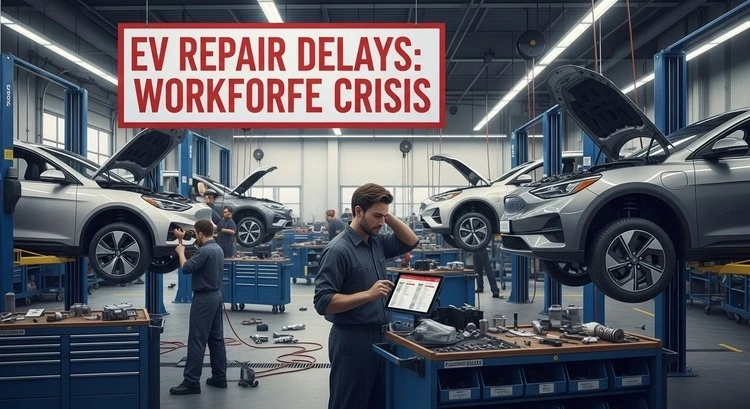
You’ve just bought a brand-new electric vehicle. The range is impressive, the tech is futuristic, and the torque is addictive. Then, three months in, a warning light appears. You call the dealership. The earliest appointment? Six weeks out. The reason? They don’t have enough technicians trained to work on your car.
This isn’t a supply chain story. It’s not about chip shortages or shipping delays. It’s about a skills gap that has been quietly widening for years — and it’s about to affect every driver who chooses a hybrid or EV as their next vehicle.
Modern vehicles — especially EVs and hybrids — are fundamentally different machines. They don’t just have combustion engines with a battery bolted on. They are sophisticated, software-driven systems where a high-voltage battery pack interacts with power electronics, regenerative braking, thermal management, and advanced driver assistance systems all at once. Diagnosing a fault in this ecosystem requires a level of training that most mechanics simply haven’t received.
And the training pipeline? It’s struggling to keep up.
The EV Boom Outpaced the Talent Pool
Between 2020 and 2025, EV sales in the United States grew by more than 400%. By 2026, plug-in vehicles account for roughly one in five new car sales. That’s a remarkable shift — but automotive technician training programs at vocational schools and community colleges have not moved at the same pace.
A traditional auto mechanic program teaches combustion engines, manual transmissions, brake systems, and basic electrical diagnostics. These skills remain important. But they don’t prepare a technician to safely work on a 400-volt battery pack, troubleshoot a CAN bus communication fault, or recalibrate an ADAS camera after a windshield replacement.
The result is a workforce mismatch. Dealerships and independent repair shops report that even their experienced technicians feel underprepared for EV-specific diagnostics. Entry-level graduates often lack hands-on exposure to the systems they’ll encounter on day one of the job.
This is not a criticism of mechanics — it’s a structural problem in how automotive education is designed and resourced.
What Actually Happens Inside an Automotive Training Program
Most people imagine a mechanic’s training as grease-stained apprenticeships spent under real cars. That does happen — but the quality and relevance of that hands-on exposure varies enormously depending on the equipment the school has available.
A training program with outdated equipment might have students practicing on a 2005 diesel engine while real-world shops are asking for technicians who can interpret live sensor data from a hybrid drivetrain or safely isolate a high-voltage system before working on it.
The gap between what’s being taught and what employers need is measurable. It shows up in longer repair wait times, higher error rates during early-career servicing, and a growing reluctance from dealerships to handle complex EV repairs in-house.
The Role of Training Equipment in Closing the Gap
This is where educational tools become critical. Forward-thinking institutions are investing in purpose-built automotive training rigs — physical models that replicate actual vehicle systems in a controlled classroom environment.
Companies like AutoEDU, which specialises in automotive training equipment for vocational schools and colleges, build trainers that use genuine OEM components. Their equipment covers everything from conventional engine management systems to full EV and hybrid system trainers — purpose-designed so students can learn to work safely on high-voltage systems before they ever encounter them in a professional setting.
The distinction matters: a student who has physically interacted with a hybrid battery trainer, practiced fault isolation procedures, and used an OBD-II scanner on a live training stand enters the workforce with a fundamentally different skill level than one who studied the same content from a textbook.
The Diagnostic Revolution: Why Modern Cars Demand More from Technicians
Walk into an automotive repair bay in 2026, and you’ll see something that would look alien to a mechanic from twenty years ago: technicians staring at screens more than they’re staring at engines.
Modern vehicle diagnostics are software-led. A technician connects a scan tool to the OBD-II port, reads fault codes, examines live data streams, and cross-references the output against manufacturer parameters. For an EV or hybrid, this process involves interpreting data from the battery management system, the inverter, the electric motor control unit, and sometimes the vehicle’s over-the-air update history.
This requires a blend of mechanical knowledge and electronics literacy that traditional training programs weren’t built to provide. Schools that have invested in electrical system trainers — boards that replicate CAN bus communication, lighting circuits, climate control systems, and engine management — give students a tangible foundation for this new kind of diagnostic work.
What Good Automotive Education Looks Like in Practice
A well-equipped automotive training programme in 2026 should include exposure to:
- Engine and transmission trainers that allow students to see internal components in motion
- Dedicated electrical system boards covering CAN bus, lighting, and ADAS sensor integration
- ABS, ESP, and brake system rigs for hands-on hydraulic and electronic brake diagnostics
- Hybrid and EV high-voltage trainers with built-in safety interlocks
- Air conditioning and climate control trainers using current refrigerants (R1234YF)
- Fault simulation modules that allow instructors to introduce real diagnostic challenges
Programs that invest in this level of equipment produce graduates who are immediately productive in modern workshops — a compelling proposition for both students seeking employment and employers looking to hire.
The Consumer Angle: How This Affects You as a Car Owner
If you own or plan to own an EV or hybrid, the quality of automotive education isn’t an abstract concern. It directly affects your ownership experience.
Repair wait times at EV-certified dealerships are notably longer than those at conventional shops. Partly this is capacity — there are simply fewer trained technicians. But it’s also a confidence issue: shops without well-trained staff are reluctant to take on complex EV work, routing everything back to the manufacturer’s network.
As the independent repair sector builds its EV capability — through technician upskilling and access to better training programmes — consumers should expect improved access to qualified service, more competitive repair pricing, and shorter wait times.
This normalisation of EV servicing is already happening in markets where automotive education has been modernised faster. Countries with strong vocational training infrastructure — and schools equipped with contemporary training tools — are producing a generation of technicians who are EV-ready from graduation day.
Service History Still Matters — Perhaps More Than Ever
One consequence of the technician shortage is that poorly maintained vehicles are more likely to develop serious faults that require specialist intervention. An EV with a neglected thermal management system, for example, is significantly more likely to experience accelerated battery degradation — a repair that can cost tens of thousands of dollars.
For car buyers, this reinforces something that has always been true: a full, documented service history matters. When evaluating a used EV or hybrid, look for evidence that the vehicle has been maintained by trained technicians who understand the system, not just someone who reset the fault code and moved on.
This also applies to understanding your car’s systems. A driver who understands how regenerative braking works, what the battery management system does, and when a fault code genuinely requires urgent attention is better positioned to make good decisions about their vehicle.
The Road Forward: Building the Technician Workforce EVs Need
The automotive industry’s future depends on solving this training gap. And the solution isn’t complicated — it’s a matter of investment and prioritisation at the institutional level.
Vocational schools and community colleges that modernise their automotive labs are already seeing tangible results: higher graduate employment rates, stronger relationships with dealership networks, and students who are genuinely excited about working on the vehicles of the future rather than feeling left behind by them.
For institutions exploring how to upgrade their programmes, the key questions are: Do your students get hands-on time with EV and hybrid systems? Can they practice high-voltage safety procedures in a controlled environment? Are your diagnostic tools and training rigs representative of what they’ll encounter in a 2026 workshop?
Final Thoughts
The next generation of vehicles is already here. The next generation of technicians who can service them is still catching up.
For drivers, this is worth understanding — because the gap between EV adoption and EV service capability will shape your ownership experience for years to come. For the industry, it’s a clear signal: the schools and training programmes that invest in modern, hands-on automotive education today are building the workforce that everyone — manufacturers, dealerships, and drivers — will depend on tomorrow.
The good news is that the tools exist. The training equipment is available. The knowledge is transferable. What’s needed now is the institutional will to make it happen — and a recognition that preparing technicians for the vehicles on the road today isn’t optional. It’s the entire point.