The Tesla Owner’s Survival Guide to the 405: Why Standard Equipment Isn’t Enough
If you drive a Tesla in Los Angeles, you already know the “Tesla Wave”—not the one between drivers, but the heat wave that hits you the moment you step into your car after it’s been parked in the sun. Or perhaps it’s the “Tesla Triage,” where you inspect your front bumper for new white specks after every trip down the 405.
Teslas are marvels of engineering, but their minimalist design and eco-friendly manufacturing have left two major vulnerabilities: vulnerable paint and thermal overload. To survive the commute from Santa Monica to Downtown, your Tesla needs more than just the latest software update; it needs a physical defense strategy.
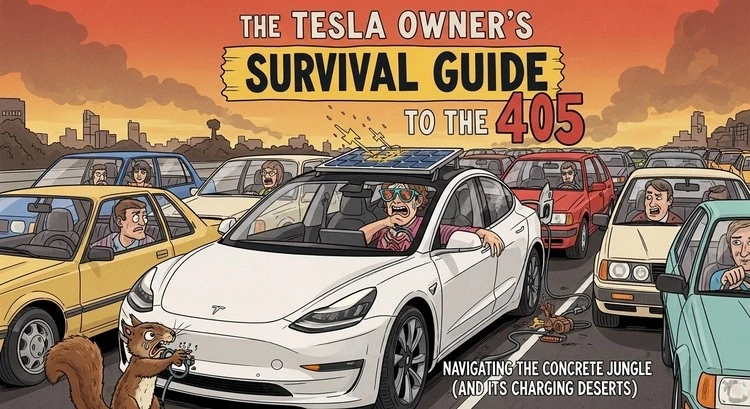
1. The “Rock Chip Magnet”: Protecting Tesla’s Soft Paint
It’s a well-documented pain point in the Tesla community: the factory paint is notoriously “soft.” Because Tesla uses environmentally friendly, water-based paints and highly aerodynamic, low-slung front ends, their vehicles are essentially magnets for road debris. On the high-speed stretches of the 101 or the 5, even a tiny pebble can leave a permanent scar on your hood.
The only definitive solution is Tesla Paint Protection Film. Often called “clear bra,” PPF is an 8-mil thick urethane barrier that absorbs the impact of road salt, gravel, and sand.
• Self-Healing Tech: Modern PPF is heat-activated. If you get a swirl mark or a light scratch, the California sun actually helps the film “heal” itself back to a smooth finish.
• Resale ROI: In the 2026 market, a Tesla with pristine, original paint commands a 10–15% higher resale value . Buyers specifically look for PPF-protected cars because it proves the owner went above and beyond in maintenance.
2. The Greenhouse Effect: Taming the Panoramic Roof
Tesla’s panoramic glass roof is an aesthetic masterpiece, providing an airy, open feel to the cabin. However, in Southern California, that glass acts like a giant magnifying glass. Even with the factory’s built-in UV tint, the roof accumulates “heat soak,” radiating infrared energy directly onto the driver’s head.
This is where high-performance Window Tinting becomes a functional necessity rather than a cosmetic luxury.
• Infrared Rejection: While standard tint just darkens the glass, nano-ceramic film blocks up to 98% of infrared heat .
• Range Efficiency: By keeping the cabin up to 60°F cooler , your AC doesn’t have to work as hard. For EV owners, this can translate to a 5–10% increase in battery range during the peak of summer.
• Signal Friendly: Unlike metallic tints that can interfere with your Tesla’s Autopilot, GPS, or Sentry Mode signals, ceramic tint is 100% signal-transparent.
3. The Modern Maintenance Ritual
Once your Tesla is shielded and tinted, you cannot treat it like a traditional car. The “soft” paint mentioned earlier means that a single trip through an automatic “brush” car wash can leave thousands of micro-scratches (swirls) in your clear coat.
To maintain that “Cybertruck-clean” futuristic look, you need a professional touch. Utilizing a specialized Auto Detailing Spot ensures your car is washed using the two-bucket method and pH-balanced cleaners.
• The Mobile Advantage: In a city where time is the ultimate currency, having a Mobile Detail Los Angeles specialist come to your home or office ensures your Tesla stays in showroom condition without disrupting your schedule.
• Ceramic Maintenance: If you’ve added a ceramic coating over your PPF, professional detailers use specific “boosters” to maintain the hydrophobic properties, ensuring water and grime slide right off the car.
The Verdict
Your Tesla is a high-tech computer on wheels, but it lives in a low-tech world of gravel, heat, and hard water. By investing in the “Trifecta of Protection”—PPF for the impact, Ceramic Tint for the heat, and Professional Detailing for the upkeep—you aren’t just pampering your car. You are securing its value, extending its range, and ensuring that your 2026 commute is as comfortable as it is sustainable.