The Essential Guide to Gathering Evidence at the Scene of a Roadside Incident
After an accident, the first thing that should be done is contacting emergency services to assist and provide medical treatment to those injured. Time is of the essence, as the steps you take immediately after an accident can make a big difference in your personal injury claim. That’s why it’s critical to gather as much evidence as possible. Call the police and take photos, obtain witness contact information, and seek medical attention. This information can help protect your rights.
Start Wide, Then Get Close
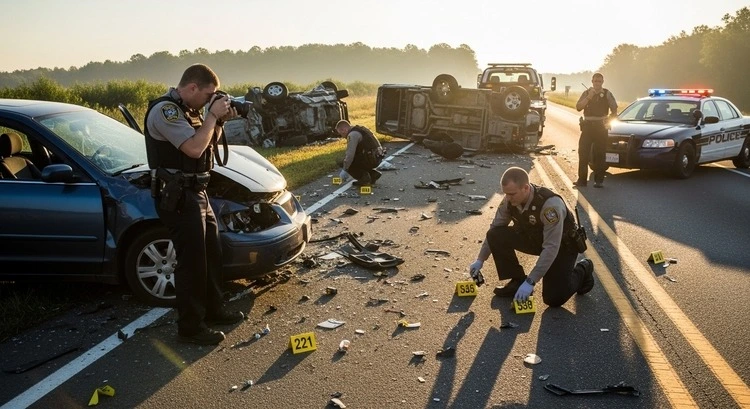
Do not worry about making pictures of the damage right after impact. It is better to take multiple, panoramic photographs first. Stand at the crossroad and put yourself in the best position to capture as much of the entire scene on one photograph as possible. Take a picture of the full scene. Get a shot of the entire intersection. Get a shot of the entire stretch of roadway. Get a shot of the closest corner where the accident occurred. Take a picture of the nearest corner, pointing your camera so you photograph as much as possible. Multiple panoramic photographs are required to capture the full picture of what you are attempting to document.
Capture Transient Evidence Before It’s Gone
Some of the most important evidence at the crash scene is also some of the most fragile. Skid marks show you braking force and direction. Fluid from a leaking vehicle shows you the final resting position. Debris scatter gives you an angle of impact. And all of it can be washed away within hours, sometimes mere minutes, if it rains or if the road crews have come to clean up the scene.
Photograph all of it, and photograph it quickly. Spoliation of evidence isn’t just a risk from bad actors, it happens through ordinary environmental and logistical processes. A quick phone video scanning the surrounding area can preserve things a few still shots might miss.
Rough out a scene diagram on the back of an envelope or use a mapping app: vehicle positions, point of impact, lane markings, proximity to junctions. This doesn’t need to be precise to be useful. It gives investigators and legal teams a reference point and, critically, it gives your account internal consistency.
Manage What You Say and to Whom
Exchange insurance information, contact information, and license numbers with the other party. No more, no less. Avoid admitting fault, apologising, or making any statements about the accident beyond the basic facts, even an offhand comment can be used against a claim later.
While still at the scene, take as much documentary evidence as possible. Photograph the vehicles from multiple angles, capturing damage, road position, skid marks, traffic signs, and the general environment. If there are traffic cameras, business CCTV, or dashcam footage in the vicinity, note their locations, this footage can disappear quickly and may need to be formally requested.
Speak with any witnesses before they leave. Collect their names and contact details, and if they are willing, ask them to briefly describe what they saw. An independent account from someone with no stake in the outcome carries significant weight in any legal dispute.
Make note of road and weather conditions at the time of the accident, including lighting, road surface quality, any obstructions, and the time of day. These details can be difficult to reconstruct later but may be highly relevant to establishing liability.
Once away from the scene, write a detailed personal account while everything is fresh. Include the sequence of events leading up to the collision, what was said by all parties, and anything else observed. Do not share this account publicly or on social media, and keep it for your legal representative’s eyes only.
Get Witness Details Before People Walk Away
Onlookers are detached from the result. This is the precise reason their recollections are so powerful in determining fault if it comes down to a legal or insurance dispute. Uninvolved witnesses are regarded by the court and insurers as some of the most reliable sources of evidence but all too often this evidence isn’t collected because no one thought to obtain it while the witness was still available.
Speak to any bystanders directly and establish whether they happened to be watching. If they were, take their contact details as a matter of urgency. A short written summary of what they say, even if it’s only one or two lines, is immeasurably better than a name alone several weeks later when memories may be less distinct.
How Your Documentation Translates Into a Claim
All this goes into the legal system. Photos confirm property damage and the severity of the accident. Medical paperwork proves injuries resulted from the crash, which is backed up by the proximate cause. Possible negligence and responsibility are pointed out via environmental information, and the police report forms the basis for all of this.
Limitations of the statute give a deadline, but the most crucial deadline for obtaining clear facts is the day of the incident. Especially for those involving motor vehicle accidents, detailed evidence documentation is key to transforming a complex liability argument into pure evidence of the truth.
However, proper evidence documentation isn’t just beneficial for lawyers; it also helps you make your case by giving out clear, relevant, and truthful details. The scene itself acts as your evidence, so start treating it like one as soon as your vehicle comes to a halt.